

Every Indian food lover knows the moment.
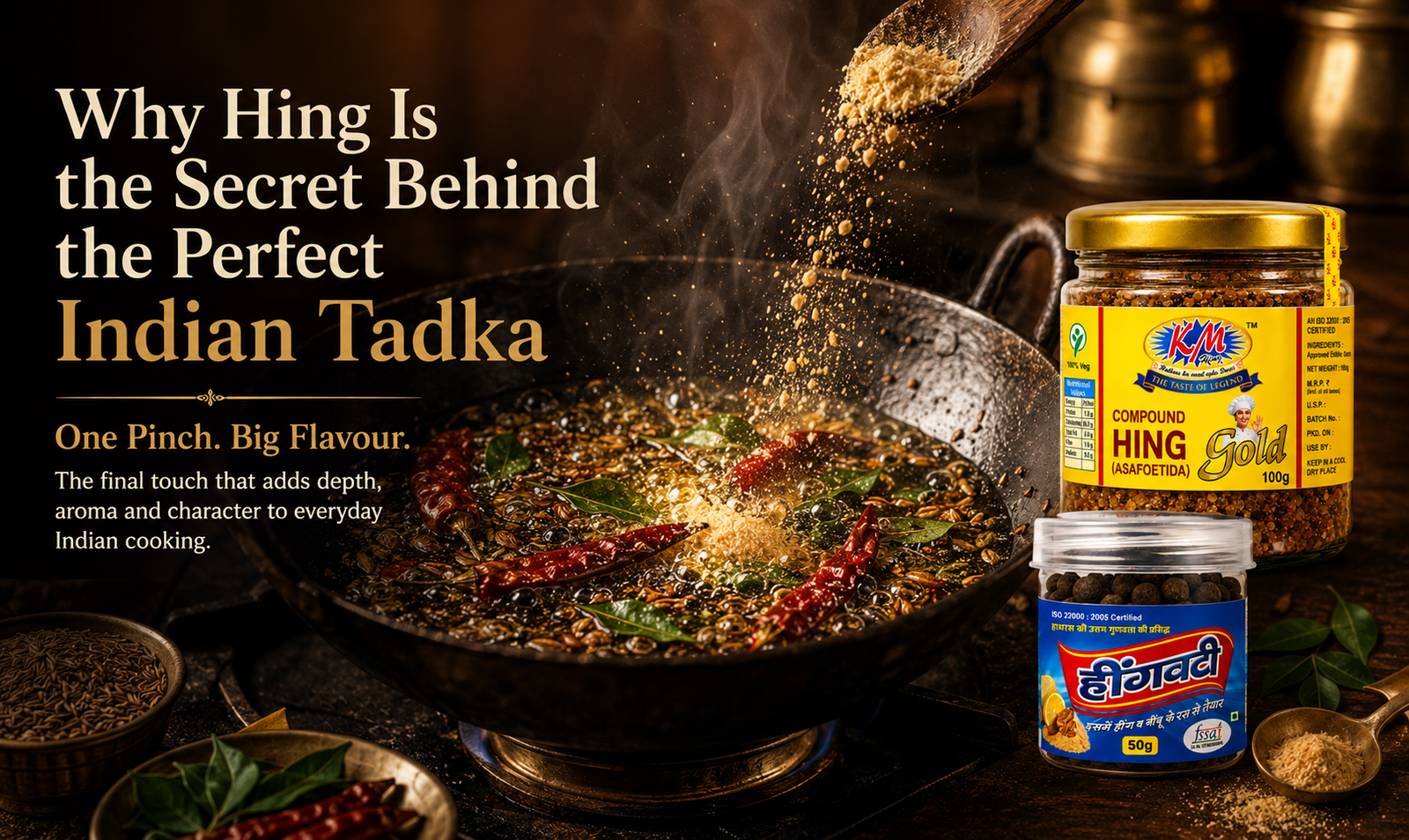
Hot ghee enters the pan.
Jeera begins to crackle.
Spices release their aroma.
And then comes a small pinch of hing.
Within seconds, the kitchen smells completely different.
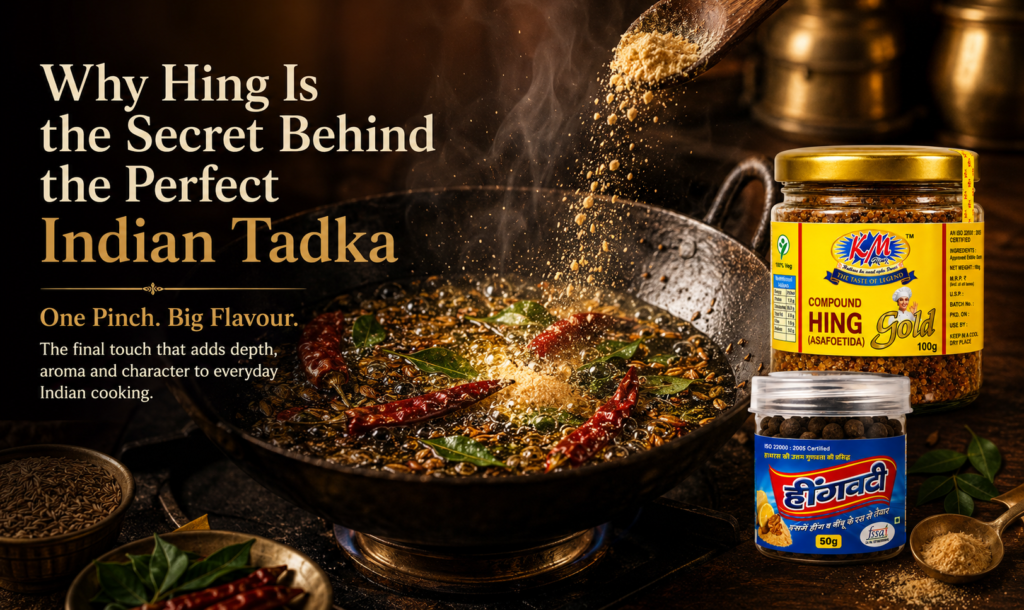
This simple process—known as tadka, tempering or chaunk—is one of the foundations of Indian cooking.
And hing often plays an important role in it.
Hing has a particularly strong aroma in its uncooked form.
Heating a small quantity briefly in oil or ghee helps release its flavour throughout the tempering.
Once combined with the rest of the dish, the sharp initial aroma becomes deeper and more savoury.
This is why timing matters.
Usually, hing is added in a very small quantity during the tempering stage rather than poured directly into the finished dish.
Hing works beautifully with many everyday Indian recipes.
It can enhance dals, kadhi, chana preparations, potato dishes, vegetables, traditional curries and many regional recipes.
The exact quantity varies depending on the recipe and strength of the product, so beginning with a small amount is usually best.
Unlike spices that are used by the spoonful, hing demonstrates how powerful a tiny amount of an ingredient can be.
Its purpose is not to dominate the entire recipe.
Instead, good hing adds another layer of aroma and depth that helps bring the other flavours together.
At KM Hing Udyog, our products are created for kitchens where flavour matters.
From our KM Compound Hing Gold range to KM Hingwati Hing, we focus on delivering products that can become a dependable part of everyday Indian cooking.
Because sometimes the difference between a good tadka and a memorable one is simply:
One perfect pinch of hing.
we bring the authentic aroma and rich taste of Hathras to kitchens across India. With a strong focus on quality, consistency, and tradition, every pack is crafted to make everyday Indian cooking more flavourful and memorable.we bring the authentic aroma and rich taste of Hathras to kitchens across India. With a strong focus on quality, consistency, and tradition, every pack is crafted to make everyday Indian cooking more flavourful and memorable.
Be the first to know about new products, special offers, festive deals, recipes, and updates from KM Hing Udyog.
© 2026 KM Hing Udyog Private Limited. All Rights Reserved.